
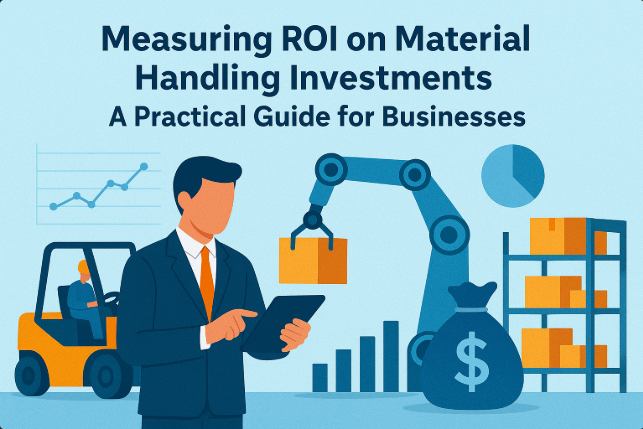
Investing in forklifts, stackers, or conveyors is more than a purchase decision—it’s a strategic investment. Yet many organizations struggle to measure the true return on investment (ROI) of their Material Handling Equipment (MHE). Without clear benchmarks, businesses risk underutilizing assets or misjudging total cost of ownership.
The first step in calculating ROI is looking beyond the initial purchase price. Factors such as energy efficiency, maintenance costs, spare parts availability, and equipment lifespan directly influence long-term value. A low-cost machine may appear attractive upfront, but frequent breakdowns can quickly erode profitability.
Operational efficiency is another key measure. The right MHE should reduce manual effort, minimize downtime, and accelerate throughput. For example, a forklift that can handle heavier loads or operate in tighter spaces can significantly reduce handling time and labor costs. Similarly, automated solutions may deliver higher ROI when integrated into large-scale operations.
Safety and compliance also play an indirect but vital role in ROI. Well-designed equipment reduces accidents, protecting both the workforce and the business from costly liabilities.
At MEL MHE Mobility, we encourage businesses to adopt a total cost of ownership (TCO) mindset. By evaluating lifecycle costs, service reliability, and performance metrics, companies can make informed choices that drive profitability.
Ultimately, ROI in mater